
Essay
What is acid sulfate soil, and why do people abandon it?
Acid sulfate soil is not born bad. It has a condition with a name and a cause, and you can see it with your own eyes if you know where to look.
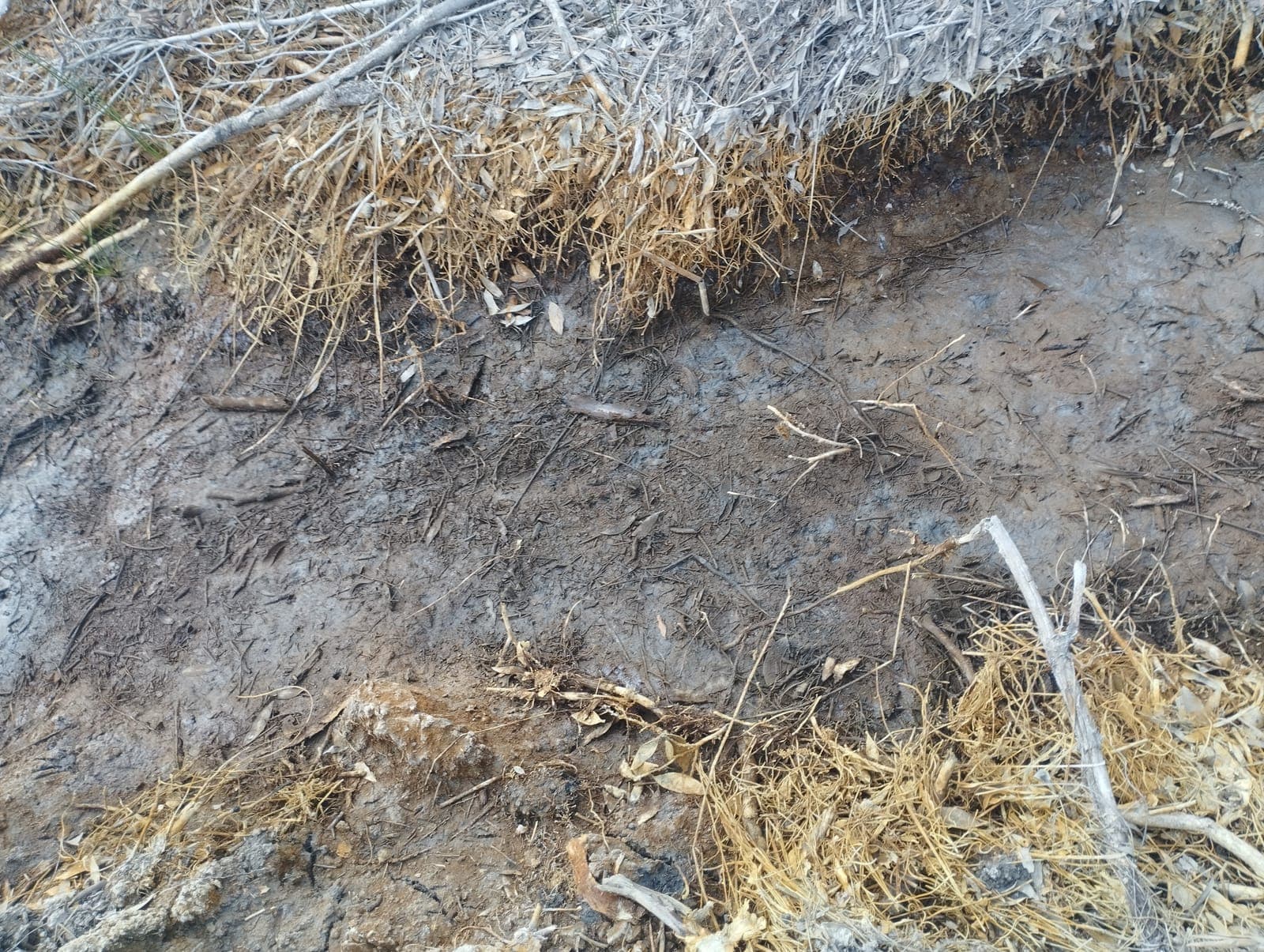
Many families put work and money into a patch of acid sulfate land for a whole season and harvest nothing, simply because they treated the wrong thing. The first thing they get wrong is the soil itself: they think it is bad soil. It is not bad. It is sick, and with a sickness it is cheaper to treat the real cause.
The short answer: acid sulfate soil sits on a sediment layer that holds sulphur. When that layer meets air, it produces sulphuric acid and the soil turns so sour that most plants cannot live in it. The soil is not dead. It has been acidified.
How it forms. In low-lying coastal and delta land such as the Plain of Reeds, layers of mud lie under water for thousands of years. Without oxygen, sulphur builds up into what land workers call the acid-forming layer. As long as it stays flooded it sleeps. Dig a ditch, raise a bed, lower the water or let it dry, and that layer meets air and starts to react.
Spotting it with the naked eye. Ditch water runs the colour of rust, sometimes with an oily sheen. The soil is yellow or streaked red-brown. Only sparse grass grows, just the few kinds that tolerate sourness. When I took on my land, the pH measured 2.5, far more acidic than ordinary farmland, and the ditch water really was rust-coloured.
Why plants cannot live in it. It is not only the sourness. When soil gets this acidic, the iron and aluminium in it dissolve into forms toxic to roots, while the nutrients plants need get locked away. Plants are poisoned and starved at the same time.
Why people abandon it. Because the familiar approach of forcing the soil with heavy inputs often costs a great deal and does not last. Every rainy season, acid rises again from the layer below. Many families try one or two crops and give up. My land lay abandoned for years in just that way, because nobody could grow anything on it.
What I learned: acid sulfate soil is not dead, it is blocked. Water, air and microbial life are still there, only their paths are obstructed. The right way is not to force it along but to find where it is blocked and open it up in the right order, then wait patiently.
After 30 months of work on the land in the Plain of Reeds, the pH in the zone with the full protocol went from 2.5–3.0 to around 6–6.5, and the soil gave its first commercial vegetable crop. What worked and what did not, I record openly on this website. If you have a patch of acid land yourself, see the Journey page, or get in touch to talk it over.
Want to know what your land really needs before you spend another đồng? Book a Land Assessment: an on-site survey, pH and salinity readings, and a report with recommendations for your own plot. Use the Contact section of the website, tell us where the land is and what is going wrong, and we will answer with specific figures instead of generalities.
Want to go deeper? See the Journey page for the four stages of remediation with monthly field photos, and read the other Q&A pieces in this series.
- #dat-phen
- #kien-thuc